
 Property co-ownership offers an innovative home ownership solution that cuts the costs of buying a home in half (or even less) depending on the number of people involved.
What is property co-ownership?
Property co-ownership refers to a situation where two or more people share the ownership of a property. Put simply, it involves:
• Pooling your money with others to put a deposit down on a home;
• Combining your borrowing power to borrow the rest from a loan provider;
• Paying off the mortgage on your home instead of paying rent (for Owner Occupiers) or earning a stream of rental income (for Investors);
• Having the flexibility to move out or sell out if you need or want to
Sharing has many advantages. Firstly, it enables you to split the cost of running a home. (eg. rates, repairs and renovations).
Secondly, all the costs of purchasing a home (eg. purchase price, legal fees, stamp duty, building reports etc) are split between the co-owners. This means that you can get into the property market at a fraction of the cost you would normally expect to pay if you were buying on your own. Plus, with a number of people paying off the mortgage, you’ll pay your mortgage off in a fraction of the time it would normally take.
What is the legal principle behind property co-ownership?
Tenancy in common is a principle of property law in Australia that allows two or more people to own property together. Unlike joint tenancy, each party can bequeath his or her interest through their will to beneficiaries of their choosing instead of to the other co-owners.
Tenants in common can own land in equal or unequal shares. It is a more flexible form of property ownership and a co-owner’s rights and obligations can be set out in a co-ownership agreement to ensure the parties are clear about the parameters of the co-purchase.
Joint tenants together own the entire interest in the property, but as individuals they own nothing. If one party dies, their share is transmitted automatically to the remaining owner.
Joint tenants have rights of survivorship: if one tenant dies then the surviving joint tenant takes the whole property.
What are the risks?
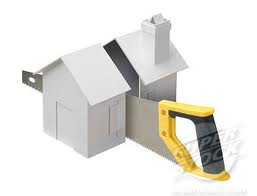 Group purchasers should get a co-ownership agreement prepared for them before they buy a property because of all of the issues that might arise between the co-owners from the date of purchase of the co-owned property. The parties might have a disagreement about the property, one party might want to move out and use their share as an investment, someone might default under their finance or want to sell out to the other parties.
The primary reason co-borrowers get a co-ownership agreement is to prevent the group purchase turning sour. If a relationship between co-owners and joint mortgagees turns sour, many legal issues arise if they have not been covered under an agreement. For instance, disputes may arise over:
• Whether to sell the house
• Whether to refinance
• Whether a party can be bought out
• How to split income and costs associated with the property
• Mortgage repayments
Without a co-ownership agreement, it can be very costly to litigate what was intended to occur between the co-owners in the case of one needing to sell out or one party defaulting under their finance. A co-ownership agreement is the most important factor in any group purchase.
If one party defaults on their mortgage repayments and the other parties do not step in to pay the amount due, this will affect the credit ratings of all co-borrowers, as they have joint and several liability.
The finance risk is perhaps the greatest factor. As co-borrowers, the parties are jointly and severally liable for each other’s debts if they are using the co-owned property as security for their mortgage.
Parties can mitigate the risk of default by ensuring their co-ownership agreement has a robust default procedure.
One business providing a very cost effective co-ownership agreement is PodProperty. Their Co-ownership Agreement has a default regime which protects the non defaulting party in the following way. The defaulting party has a grace period after failing to pay their mortgage payment in which the non-defaulting party steps in to cover payment. If this occurs the defaulting party owes the non defaulting party the missed mortgage payment as a debt with penalty interest accruing daily.
If the defaulting party missing a second payment, the non-defaulting power receives a power of attorney to do to do whatever they want with the defaulting party’s share of the property. For example, they can refinance it or sell the defaulting party’s share of the property with all costs associated with such default coming out of the defaulting party’s share.
Do the various government grants and stamp duty exemptions support property co-ownership?
First Home Saver Account scheme
This new scheme will allow first home buyers to save money towards a deposit for a house or build a new house and:
• The Government will pay a bonus contribution on the first $5,000 of individual contributions made each year, and individuals can contribute a maximum of $10,000 each year.
• Investment earnings or interest that accrues in First Home Saver accounts will be taxed at a low 15 per cent.
• Withdrawals will be tax free if used to purchase a first home to live in.
Treasury have recently confirmed that co-owners will be able to aggregate their loan accounts together to purchase property as tenants in common.
First Home Owners Grant
If you are all eligible to obtain the grant, the government will provide one grant only in respect of the co-owned property (in effect, each co-owner gets a share of the grant).
Stamp duty exemptions
Each state is different. All offer some type of stamp duty exemption to first home buyers. Some states (eg NSW) are more generous than others (eg, Queensland). If all co-owners are eligible, then they can take advantage of the stamp duty exemption provided they meet the other criteria (see www.firsthome.gov.au). NSW is the most progressive state, allowing From 1 May 2007, First Home Plus One allows eligible purchasers to buy property with other parties and still receive a concession. To qualify the eligible purchasers must buy at least 50 per cent of the property.
What do I need to organise to buy property with my friends, family or partner?
Group finance
A joint mortgage is a home loan given to more than one party based on their criteria together, rather than individually. Groups of property buyers often apply for a joint mortgage because it allows them to combine their incomes in order to qualify for a higher loan amount, than would be possible individually. All the purchasers’ names will go on the mortgage and title deed and the co-borrowers will be jointly and severally liable for each other’s debts. One of the biggest differences when buying with friends is what to do if one party wishes to sell the property or is unable to meet their share of repayments. A well drafted Co-Ownership Agreement should set up a default regime so that the co-owners can manage any default that occurs with respect to the co-owned property.
A well-drafted Co-Ownership Agreement
A co-ownership agreement is a legal document which sets out the rights and obligations of each person with a share in the property. It can also be used to set out how the co-owners want to deal with any other issues related to the property. PodProperty is one source of co-ownership agreements and charges $350 per co-owner.
A conveyancer
Conveyancing refers to the process of preparing for the transfer of the legal title to property from one person to another. In your case, it will be transferred into your name and the names of those you are buying your home with. As part of this process, the lawyer will undertake a range of inquiries relating to the property and carry out a number of checks which can take from 6 to 8 weeks to complete. These inquiries are normally completed before the date selected for settlement which will have been set out in the contract for the sale of the property.
realestate.com.au